Chemical Experimentation and Application
CSCA Chemical Experimentation and Application study guide organized around the publicly available CSCA syllabus. Practice Chemistry questions on aicsca.com.
Before planning this topic, check the CSCA Exam Guide 2026 for exam dates, registration, fees, and subject requirements.
Syllabus Alignment
This study guide is organized around the publicly available CSCA syllabus for international undergraduate applicants.
Who It Is For
International students preparing for CSCA Math, Physics, Chemistry, or Chinese exams.
Related Practice
CSCA Practice · Go to questions
Past papers and worked video solutions · Timed mock exams · All subject video lessons
Practice by Topic
Jump from this tutorial to filtered practice questions for the same knowledge point.
Related formulas, concepts, and glossary terms
Chemistry Formula & Concept Reference
- Dilution Law Formula
- Laboratory Preparation of Ammonia (Ammonium Salt and Base Heating)
- Laboratory Preparation of Carbon Dioxide (Marble and Dilute Hydrochloric Acid)
- Laboratory Preparation of Oxygen (Decomposition of Potassium Chlorate)
- Oxygen Test (Glowing Splint Rekindles)
- Laboratory Preparation of Hydrogen (Zinc and Dilute Sulfuric Acid)
- Laboratory Preparation of Chlorine (Manganese Dioxide and Concentrated Hydrochloric Acid Heating)
- Dilution Formula
Chemistry Exam Glossary
Tutorial Content
Chemical Experimentation and Application
Module Framework
This module aims to bridge chemical theory with hands-on laboratory practice and industrial production. It serves as a crucial link between microscopic chemical principles and macroscopic chemical applications. For CSCA candidates, understanding experimental logic and flowchart analysis is key to achieving high scores.
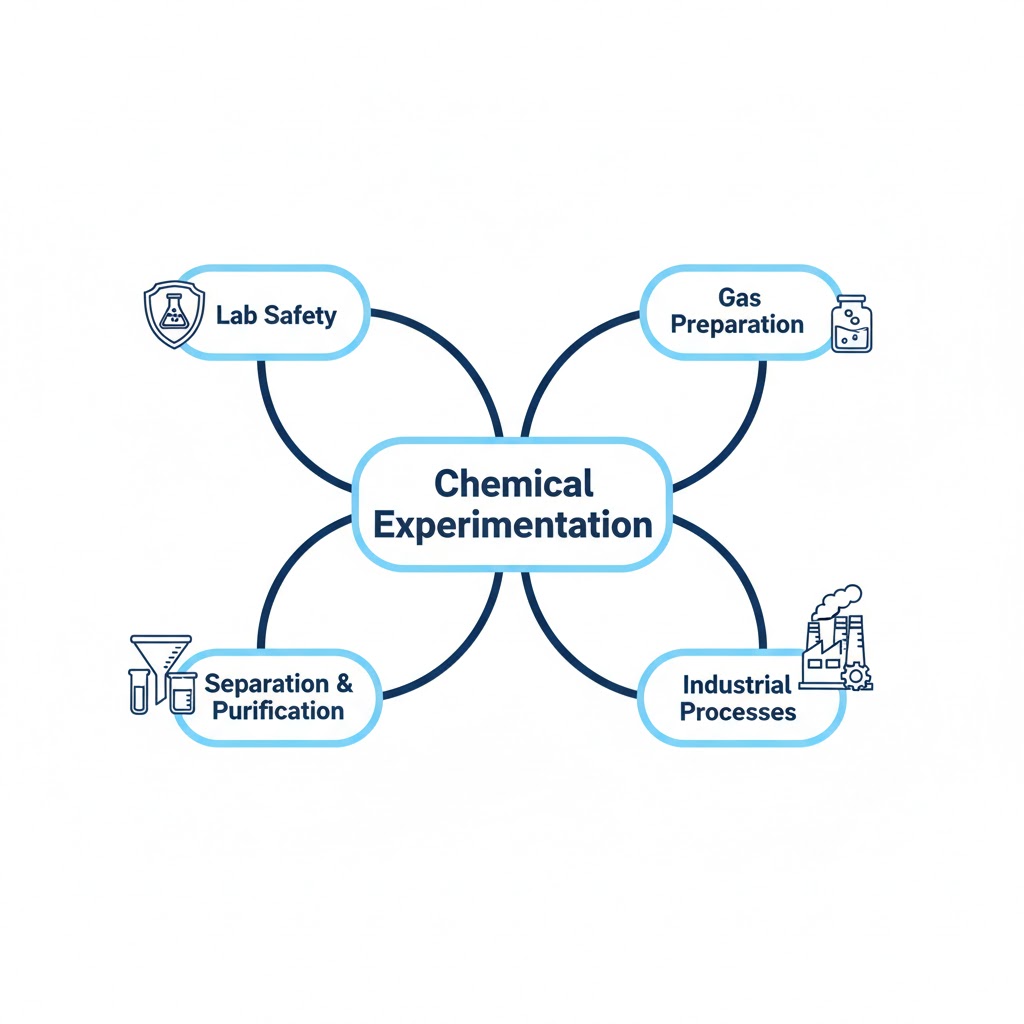 The content is structured around four core pillars:
1. **Laboratory Safety and Instrument Use**: The foundation and prerequisite for all experimental operations.
2. **Preparation and Testing of Common Gases**: The core representation of fundamental experimental skills.
3. **Methods for Separation and Purification**: Key techniques for handling mixtures and obtaining pure substances.
4. **Analysis of Industrial Chemical Processes**: A systematic engineering approach to scaling up and optimizing laboratory reactions for mass production.
---
Learning Objectives
Upon completing this module, you will be able to:
1. Establish Safety Awareness
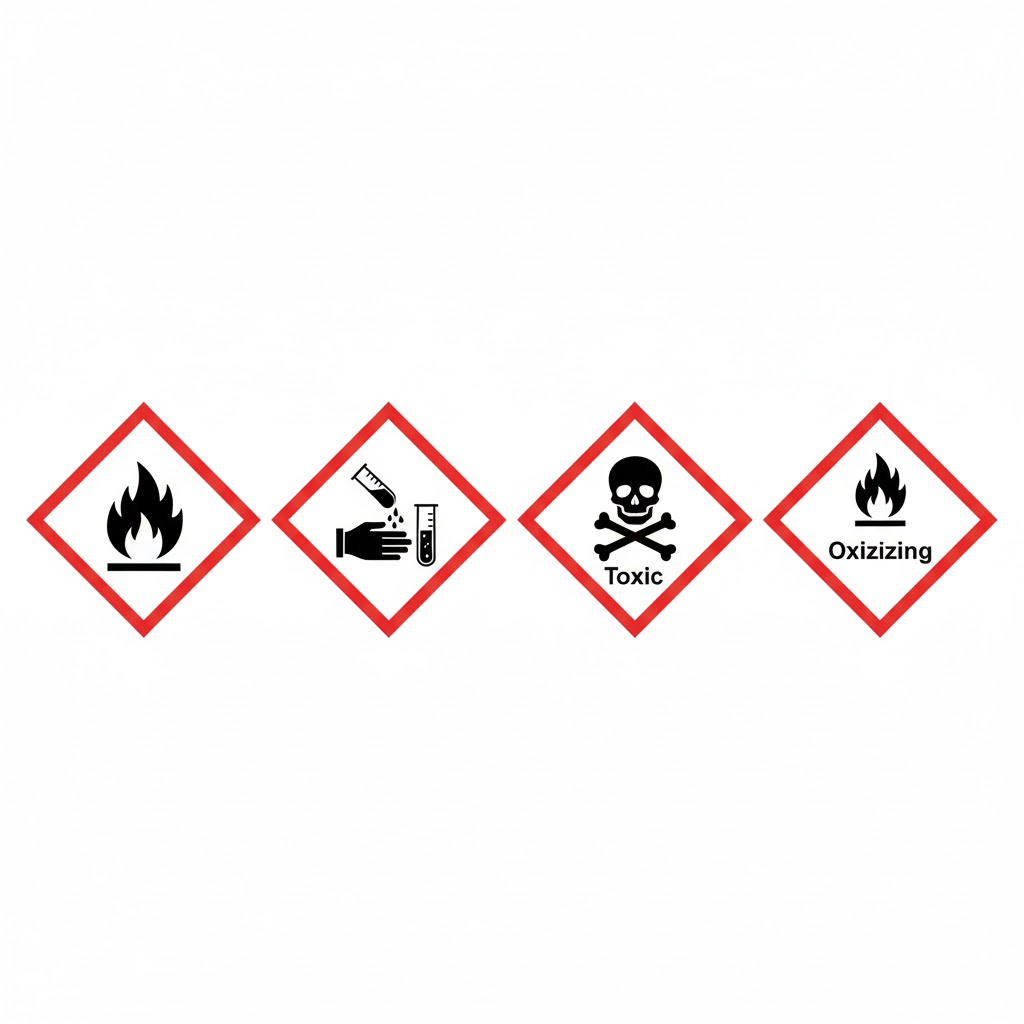
Understand and adhere to basic laboratory safety rules. Identifying hazardous chemical labels is a frequent topic in exams.
* **Key Focus**: Recognize symbols for Corrosive, Flammable, Toxic substances, etc.
* **Application**: Master emergency procedures for incidents like acid/base spills or alcohol lamp fires.
 ### 2. Master Core Experimental Skills
Familiarize yourself with the names, uses, and basic operational standards of common chemical apparatus (e.g., burettes, volumetric flasks) and be capable of independently designing and conducting fundamental experiments.
3. Understand the Logic of Preparation and Identification
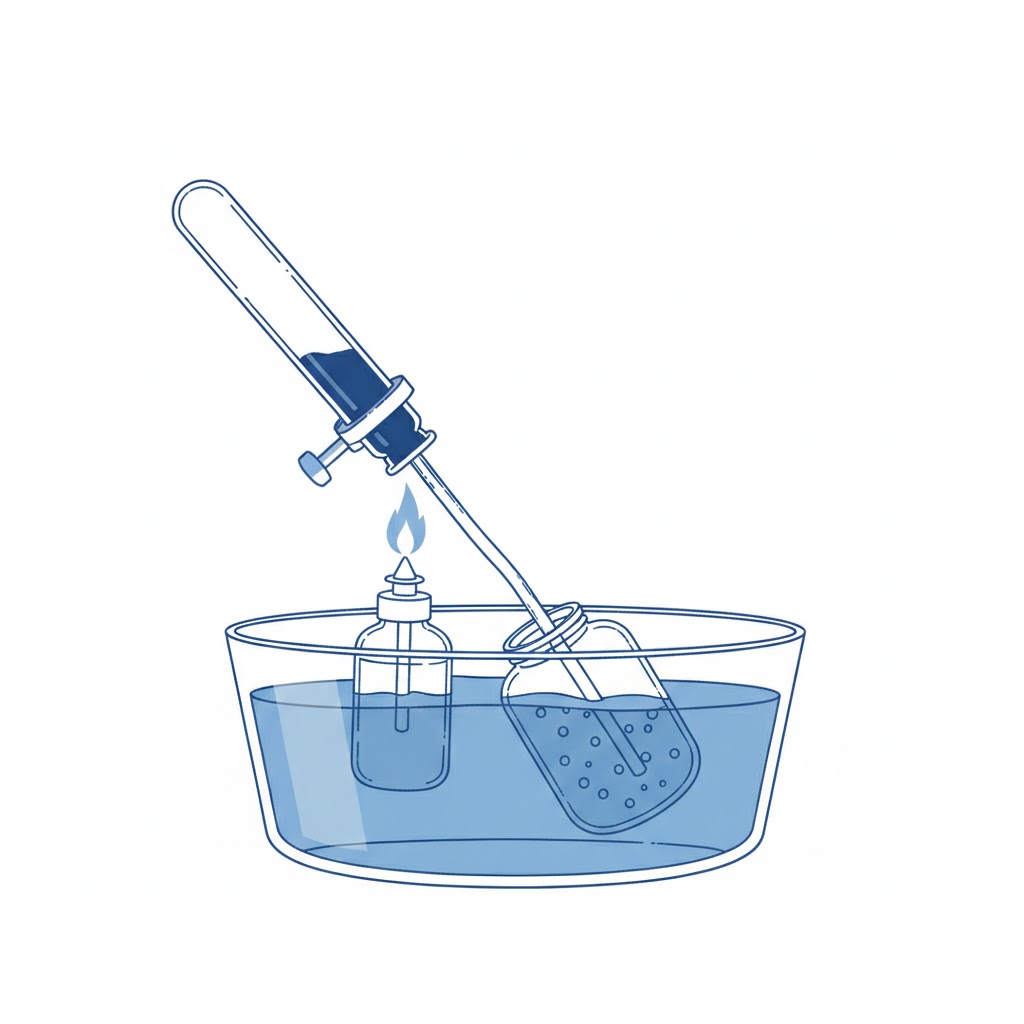
Master the principles for the laboratory preparation of common gases such as $\text{O}_2, \text{H}_2, \text{CO}_2, \text{Cl}_2$.
* **Systematic Process**: Generator $\rightarrow$ Purification $\rightarrow$ Collection $\rightarrow$ Tail Gas Treatment.
* **Apparatus Selection**: Choose the appropriate generator based on the state of reactants (e.g., Solid-Solid Heating, Solid-Liquid Ambient Temperature).
 ### 4. Apply Separation and Purification Techniques
Select appropriate methods based on the property differences of components:
* **Physical Methods**: Filtration (solid-liquid), Distillation (boiling point differences), Extraction (solubility differences).
* **Chemical Methods**: Precipitation, Redox methods, etc.
5. Analyze Industrial Processes
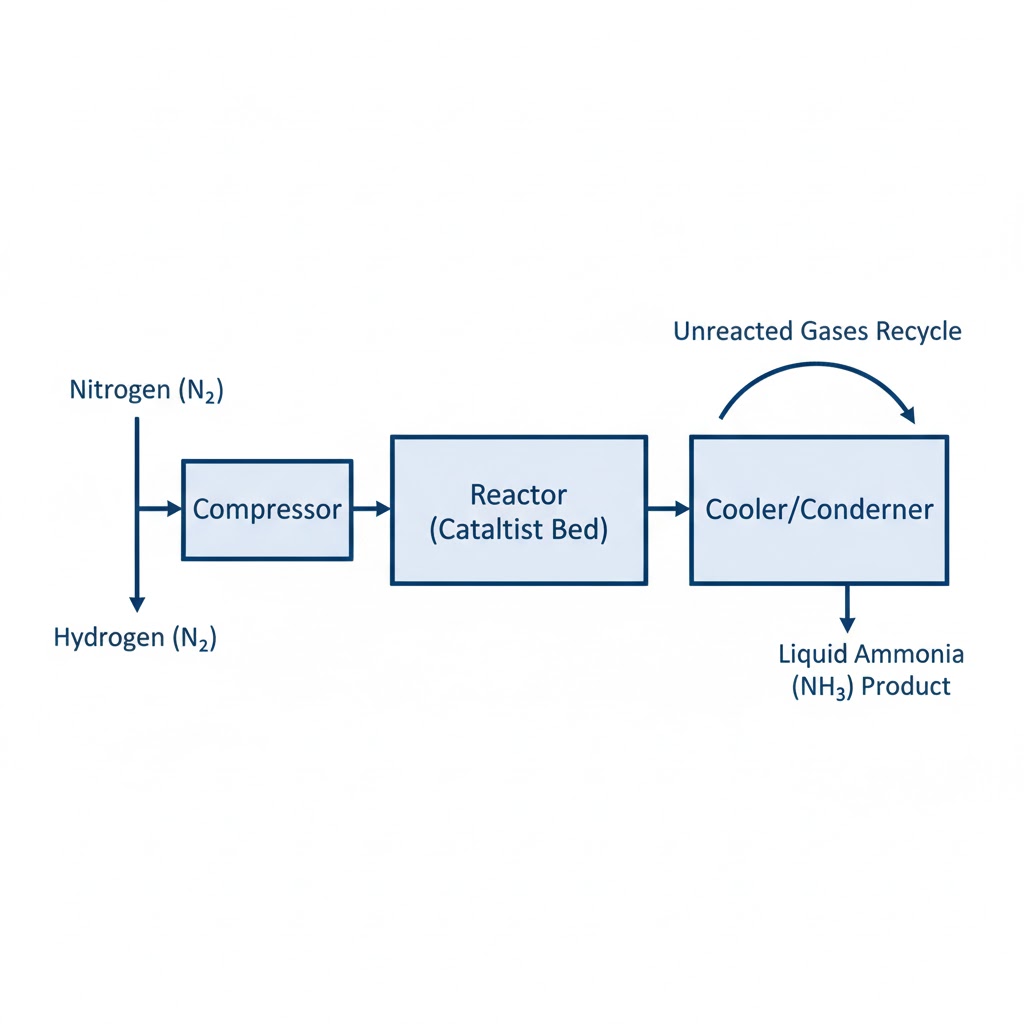
Using typical industrial processes like the Haber Process for ammonia synthesis as examples, understand how to translate laboratory reactions into high-efficiency, economical, and eco-friendly industrial production.
* **Reaction Principle**: $\text{N}_2 + 3\text{H}_2 \rightleftharpoons 2\text{NH}_3$
* **Exam Point**: Analyze the function of equipment in flowcharts (e.g., heat exchangers, absorption towers) and the concept of recycling loop.
 ---
---
Module Importance
This module is not only a vital part of the CSCA Chemistry exam but also essential for cultivating your scientific literacy, practical ability, and engineering mindset. It emphasizes the unity of "knowledge and action," requiring you to apply knowledge of elemental compounds, reaction principles, and atomic structure to solve practical problems, laying a solid foundation for future professional studies and research.